

Keep AI out of the critical path
The deterministic crawl and core accessibility checks use zero model tokens; model assistance is optional for semantic image description.
LOADING
Opening the page…
In development / 2026 / Accessibility engineering
Accessibility findings become useful when a fix can be re-tested, security-checked and proved.
Deterministic scanning, remediation, security and proof
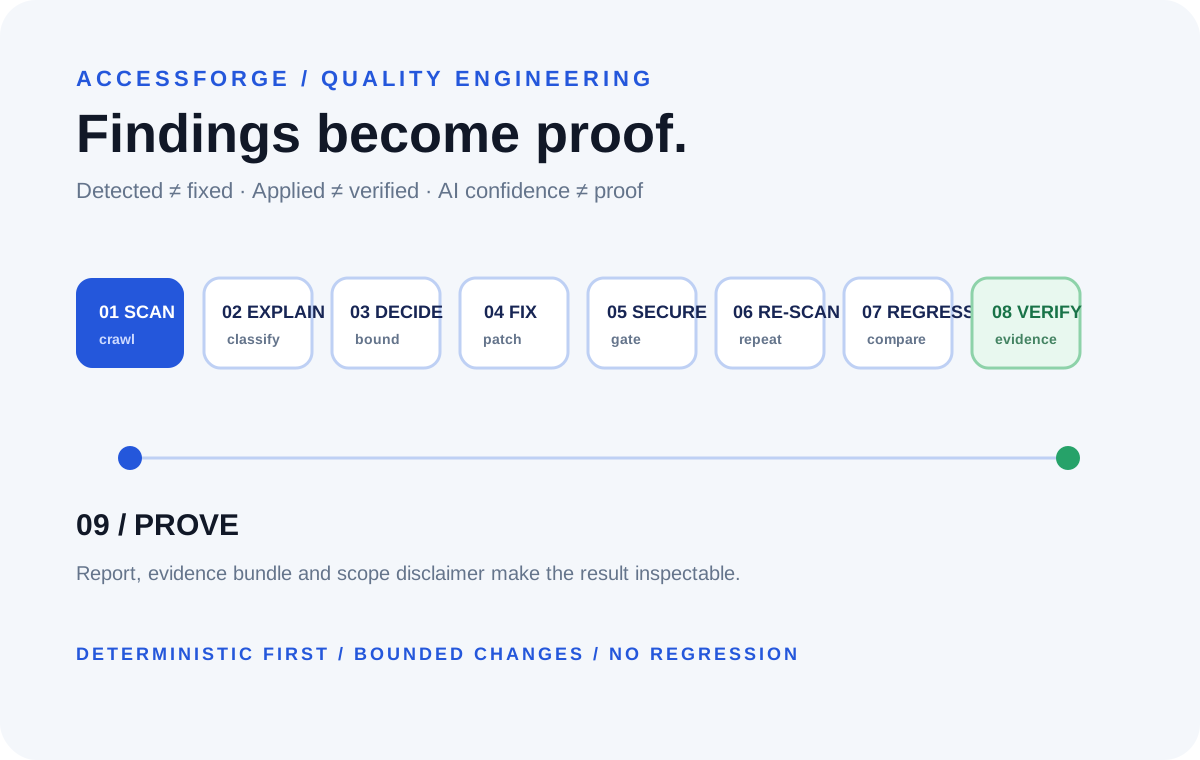
AccessForge treats accessibility remediation as a verification loop: detect, remediate, check security, rescan and record proof.
A detected defect is not the same as a fixed or verified defect. Accessibility work needs an evidence chain that can survive a re-scan and regression check.
The local build separates findings, applied changes and verified fixes. Its pipeline includes deterministic scanning, remediation steps, security checks and regression evidence.
The deterministic crawl and core accessibility checks use zero model tokens; model assistance is optional for semantic image description.
Detected, applied and verified are separate states, with re-scan and regression checks between them.
The source includes API, MCP, security and full-workflow tests, while production deployment remains unverified.
Each stage records a distinct result. A proposed change is not marked resolved until a new scan and the required checks support it.
Playwright crawl and WCAG-oriented deterministic analysis.
Targeted ARIA, keyboard, contrast and content changes produce change records.
Semgrep and safety checks gate accepted remediations.
Reports, evidence and proof endpoints preserve the result and its scope.
The code has tests for scanning, changes and regression checks. The interface currently reports an offline state, so the complete service journey still needs a running environment.
In development as a local build. There is no confirmed public service or running production environment.